Attempts at Comet Lovejoy: The RASC Party

On January 19, 2015, RASC hosted a star party at Glen Major Forest, and since it would be my last chance at imaging the comet before starting my new job, I decided to take advantage of the party and go there.

My goal at that party would be to image the comet with its tail. When I arrived, there were many people already there. There were new members, and veteran members. More people would’ve come, but seeing as it was very cold, it was understandable.

After saying hi to everyone, and looking at the comet through a friend of mine’s binoculars, I quickly set up my telescope, and aligned it to Betelgeuse and Polaris, with the help of one of my friends.

After asking the host to show me where the comet is, I tried finding it with my telescope. After a lot of help from my friends, I eventually found it, and set my telescope to take multiple one minute exposures. The result were very shaky, but there were a few photos that turned out well.
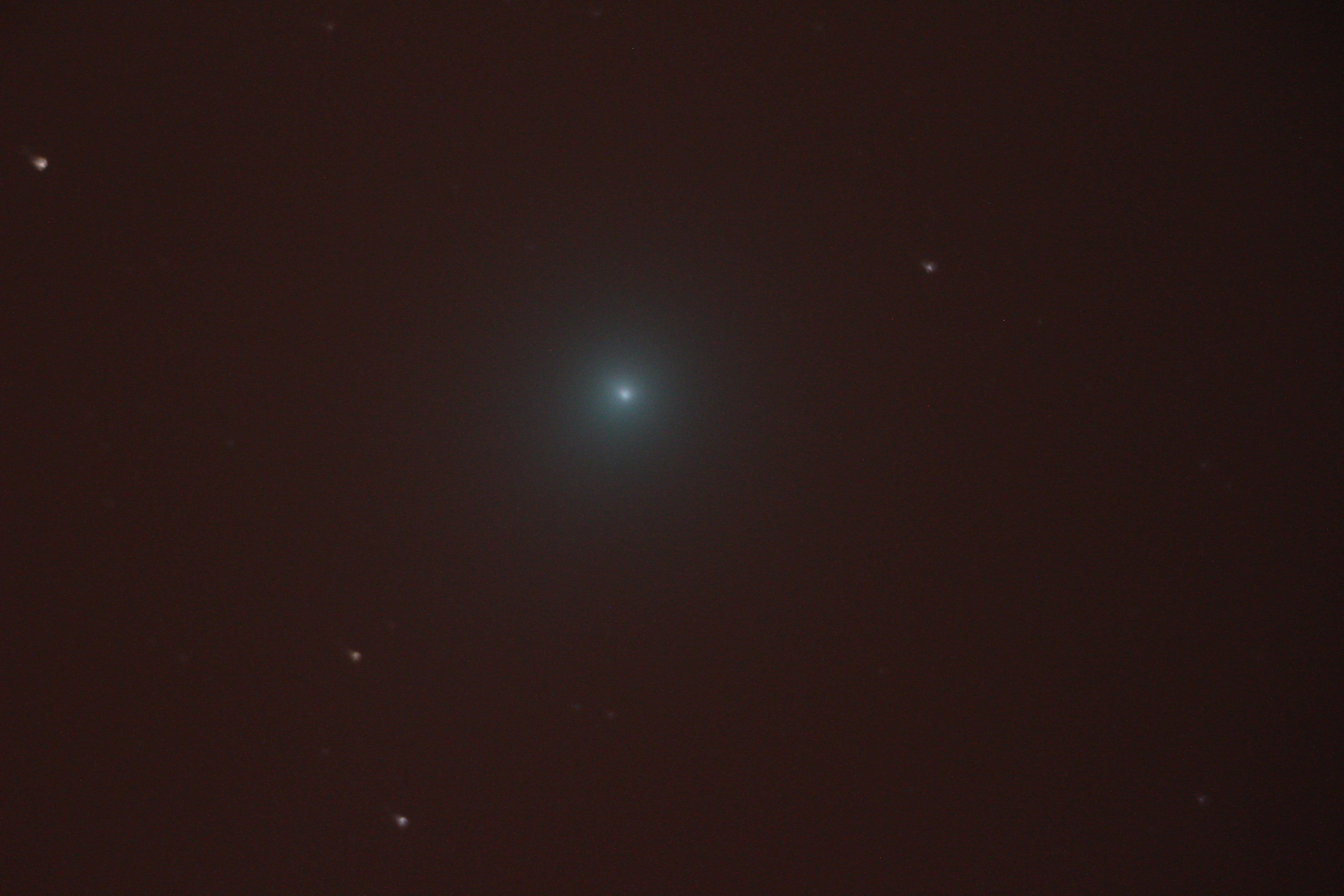
IMG_2084

Comet Lovejoy 61.2″ exposure, f/10, ISO 1600


While the camera was capturing the photos, I went around and saw what everyone else was doing. They were all looking at very cool celestial objects. However, there were bright lights that came during the night from the North-East. It was troubling. My friends told us that it was from a nearby ski resort. Hopefully, the lights don’t ruin any future RASC events at Glen Major forest.

Soon enough, the clouds came in, and we all packed up. I was the second-last to leave, while the host left the last. It was a successful night. I was able to get a good image of the comet, but I didn’t get the tail like I wanted to. This would probably be my last chance at imaging the comet. The next day was predicted to be clear, but I have to get up early the day after for work. Thankfully, I do not let that day go to waste. See the next blog post.

Keep Looking Up. There is always something up there.

Attempts at Comet Lovejoy: A timelapse

On January 16/17, 2015, I went to Glen Major again, and set up my telescope the same way.

I tried looking for the comet using my camera at 300 mm zoom, but to no avail. The comet was nowhere to be seen. It was frustrating for me to not see the comet, but it wasn’t meant to be. Therefore, I decided to let my camera image a number of frames of the sky and back home, I would combine them together to create a startrails image.

At this time, I wanted to try finding the comet using the wide-angle lens, but I wan’t finding it and the clouds were coming over. Therefore, I decided to pack up and go home. Just before I left, I looked up again, and saw that the sky cleared up again. It was unfortunate, but I was ready to leave.

The session was successful. I got a timelapse image, but I didn’t get image the comet like I wanted to. Hopefully, I get a second chance at it. For now, here is the image, and the videos that came from it.

Startrails_Sky_v3

139 frames: 20″, f/4, ISO 1600


Keep Looking Up. You never know what you will find up there.


Attempts at Comet Lovejoy: At Glen Major again.

On January 12, I went up to Glen Major again to try my hand at imaging the comet again.

It was cold as always, but that didn’t stop me. I quickly assembled and aligned my telescope to my two favorite stars, Betelgeuse and Polaris. Before I tried imaging the comet again, I decided to take 10 images of the Orion Nebula to stack back home. The result was not good. The images turned out to be blurry, and unfocused. It’s disappointing. In the future, I need to figure out why it is so unfocused. Maybe the telescope needs to acclimatize to the ambient temperature (-20 C :P). Maybe there is a problem with the mirrors. Whatever the case, I need to find a solution.

I then began searching for the comet using my camera. I started taking pictures of the sky to try and find the comet, but I noticed the pictures displaying signs of trailing, which meant that the mount became too cold to operate properly, which led me to pack up and go back home.

Before going home, I was able to image the cityscape on the road to Clairemont. It was beautiful, but imaging it was difficult. After that, I went back home.

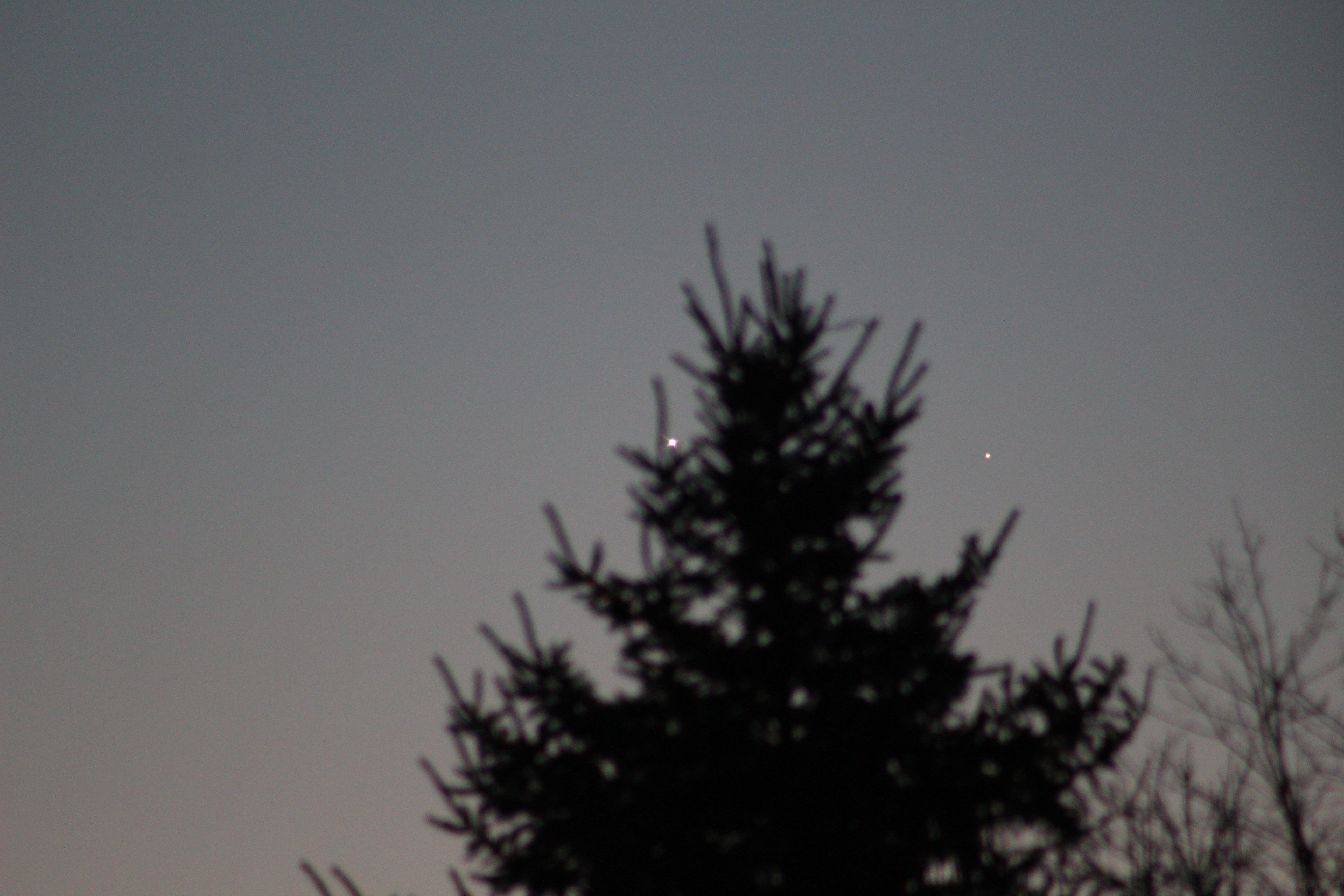
I may have not captured any good image that day, but on January 14th, I was able to image a close approach of Venus and Mercury from my bedroom. Here is the picture below. Venus is snuggling beside the tree, and Mercury is a step away from the tree.

IMG_1191

Venus and Mercury between a tree: 20″, f/5.6, ISO 1600

Keep Looking Up. You never know what you will find.


Attempts at Comet Lovejoy: Up on Cold Creek

On January 10, 2015, New Eyes Old Skies hosted an event at the Cold Creek Conservation Park. DDO Defenders astronomers and Ian Shelton and Tuba Koktay, in a heated building, presented to all the participants an overview of what to expect in the night sky during the month of January, and it was interesting. This month featured a visible Jupiter moving up the night sky; Venus, and Mercury coming close to each other; and a bright comet called Comet Lovejoy flying through the sky, getting better and better until the Moon comes back. The presentation successfully piqued the interest of many participants.

Before I arrived at Cold Creek Conservation Park, I drove up a hill in Markham where all of Markham was visible. There, I was able to image Venus and Mercury, although not in the same frame.

IMG_1033

Venus after Sunset. 1/125″ exp, f/10, ISO 1600

IMG_1052

Mercury after sunset. 1/15″ exp, f/10, ISO 1600

Coming into the park, it was completely overcast. By the end of Ian’s presentation, the sky cleared up enough to reveal the night sky. There were a few scattered clouds in the sky, but they quickly moved out of our way. Since the temperature was -9 C, I had to set up and image very quickly lest the telescope freezes again. Taking what I learned from my previous astronomy session in Glen Major Forest, I aligned my telescope to Betelgeuse and Polaris using the Two Star Alignment method. When it was ready, I let everyone know inside, and many came out to see me image the night sky.

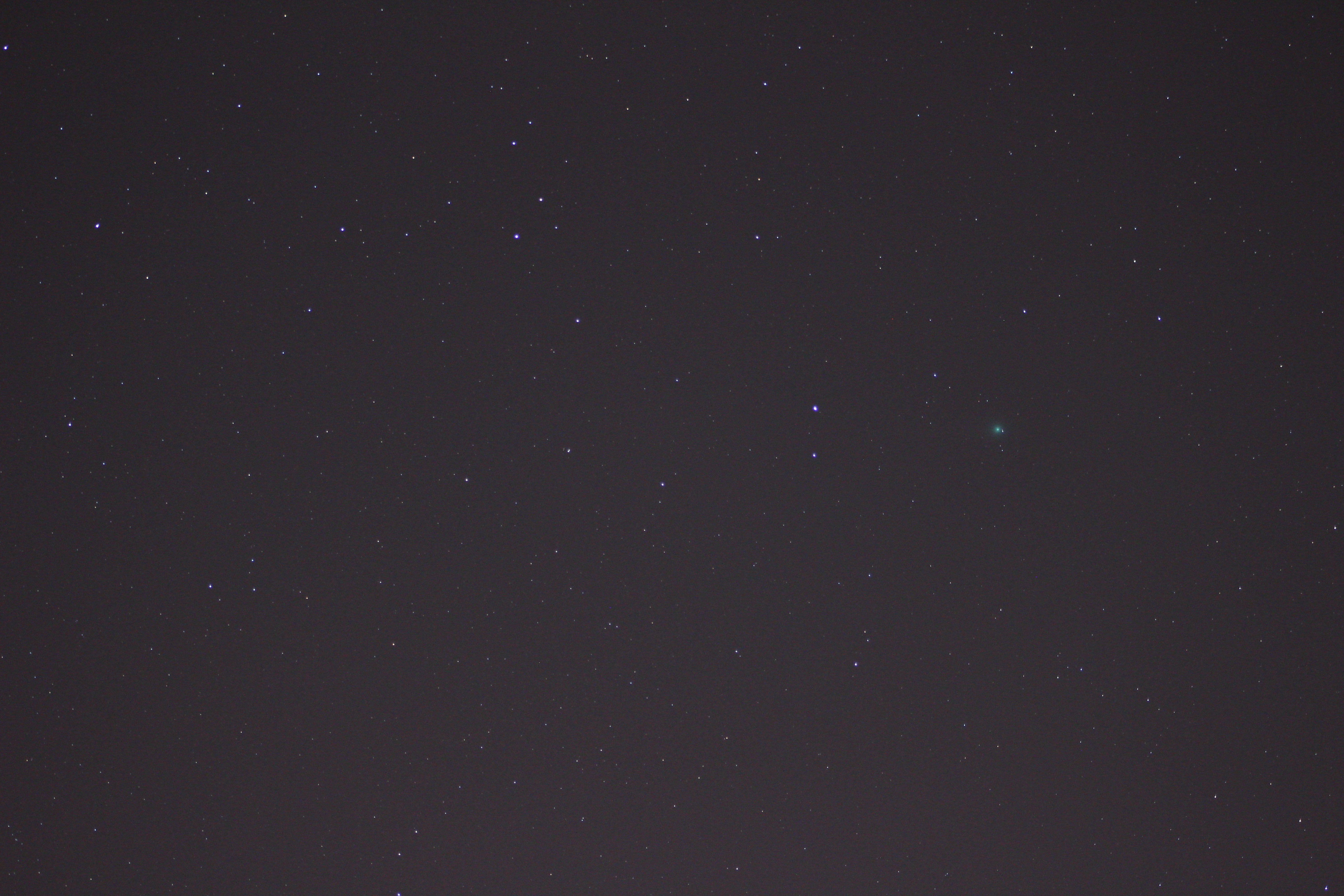
That night, I got lucky with good images of Comet Lovejoy.

IMG_1075

Comet Lovejoy: 75mm focal length: 10″ exp, f/4, ISO 1600

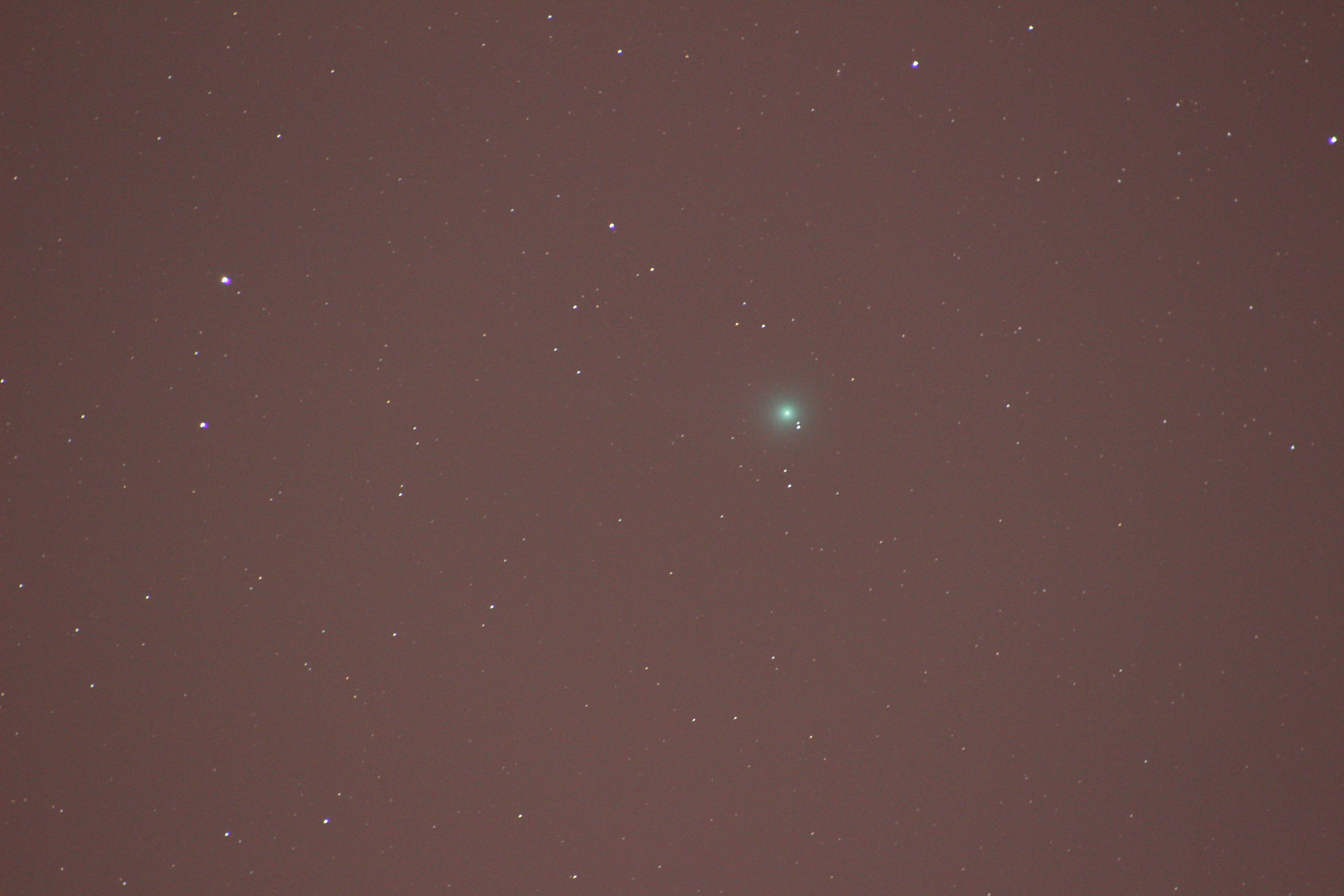
I had taken 10 x 30 second exposure images to stack, but when I checked them, only one was good enough to share. The rest suffered from camera shake. Here it is below:

IMG_1093

Comet Lovejoy: 255mm focal length: 30″ exposure, f/5.6, and ISO 1600.

I wanted to find the comet using my telescope, but my battery was low on energy and finally died. Disappointed, but satisfied with my work, I packed up my scope and made my way home. It was a successful night. I got the chance to image the comet again, and get better pictures. I didn’t get the tail like I wanted, but I guess there is always next time.

Thank You for reading everyone. I hope you are all enjoying these stories. I wanted to mention that the presenters, Ian and Tuba offer a number of classes for the general public, most notably their “Introduction to Astrophotography” class. The courses are full of useful information, and are very well presented. I have taken these courses, and I learned a lot from them. I recommended them to everyone interested in astrophotography. The link is here.  They also have a lecture series called, ‘Search for Extraterrestrials: Life Originating Elsewhere in the Universe.’ The link is here. Keep looking up! You never know what you will find up there.


Attempts at Comet Lovejoy: Failure at Glen Major

On January 9/10, 2015, my father and I decided to go to Glen Major Forest to image the comet.

It was -13 C that night, with windchill making it worse. Within a few minutes of arriving, we started setting up the telescope outside. We quickly aligned the telescope to the Moon, and we saw the majesty of the Moon up close. We tested the mount’s tracking capabilites by letting the telescope track the Moon, and it was successful. We decided to move towards Jupiter next, and we stayed there. However, it started to drift greatly. This gave us the theory that the planetary alignment is only good as long as the telescope doesn’t move around. It was a revelation. We then begin to realign using the Two Star Alignment method.

We aligned the scope to Betelgeuse, and Polaris, but the mount started to slow down at top speed. Having been exposed to the cold for over an hour, the motor started to freeze, and soon enough froze all together. Luckily, we brought two telescope mounts with us, and we debated whether to switch out the mounts. Eventually we did, but when it came time to align the telescope, the mount did not respond to my commands. It was heartbreaking for me. Our second chance at imaging the night sky failed for some reason.

After that, I took a few random pictures, and then we quickly packed up and left. That session went really badly. I didn’t get any good pictures that night. The only thing I took away from that night is that Solar System Alignment is only good for planetary observing. The next time I go outside, I will not make that mistake again.

Attempts at Comet Lovejoy: From my backyard

This new year gifted us with many great opportunities to see something truly unique. It’s called C/2014 Q2, also known as, Comet Lovejoy.

Comet Lovejoy was first discovered by Terry Lovejoy in Australia in August 2014. Ever since that time, it has brightened significantly, and has now crossed the celestial equator becoming visible for the Northern Hemisphere. Since the start of the new year, I’ve been trying to image the comet. The next few posts will chronicle my attempts to image the comet.


My First Attempt

On January 6, 2015, I started my journey on my front yard, freezing myself in sub-zero temperatures. I opted to use my tripod instead of my telescope. I started taking pictures of the full moon. It was magnificent!

IMG_0300

The Full Moon

After capturing a number of good images, I went on to image the Orion Nebula. That took more effort, but it was all for naught, as my images were not focused enough. It was heartbreaking but there was no point sulking on it.

IMG_0415

Orion Nebula Out of Focus


IMG_0415

Cropped_Orion_Nebula

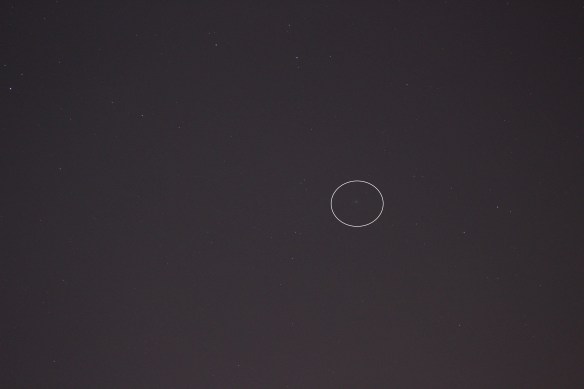
I then decided to try my hand at imaging the comet, and I was dealt a good hand. Using my father’s telephoto lens, I was able to image the comet near Orion. I took a number of two second exposures of the image, adjusting the image to get the comet at the center of the frame each time until it was just right. I was able to stack them together to reduce the noise. The final image was dim, but I have, indeed, caught a comet.

IMG_0798 - Copy

Comet Lovejoy – Highlighted

IMG_0798

Comet_Cropped

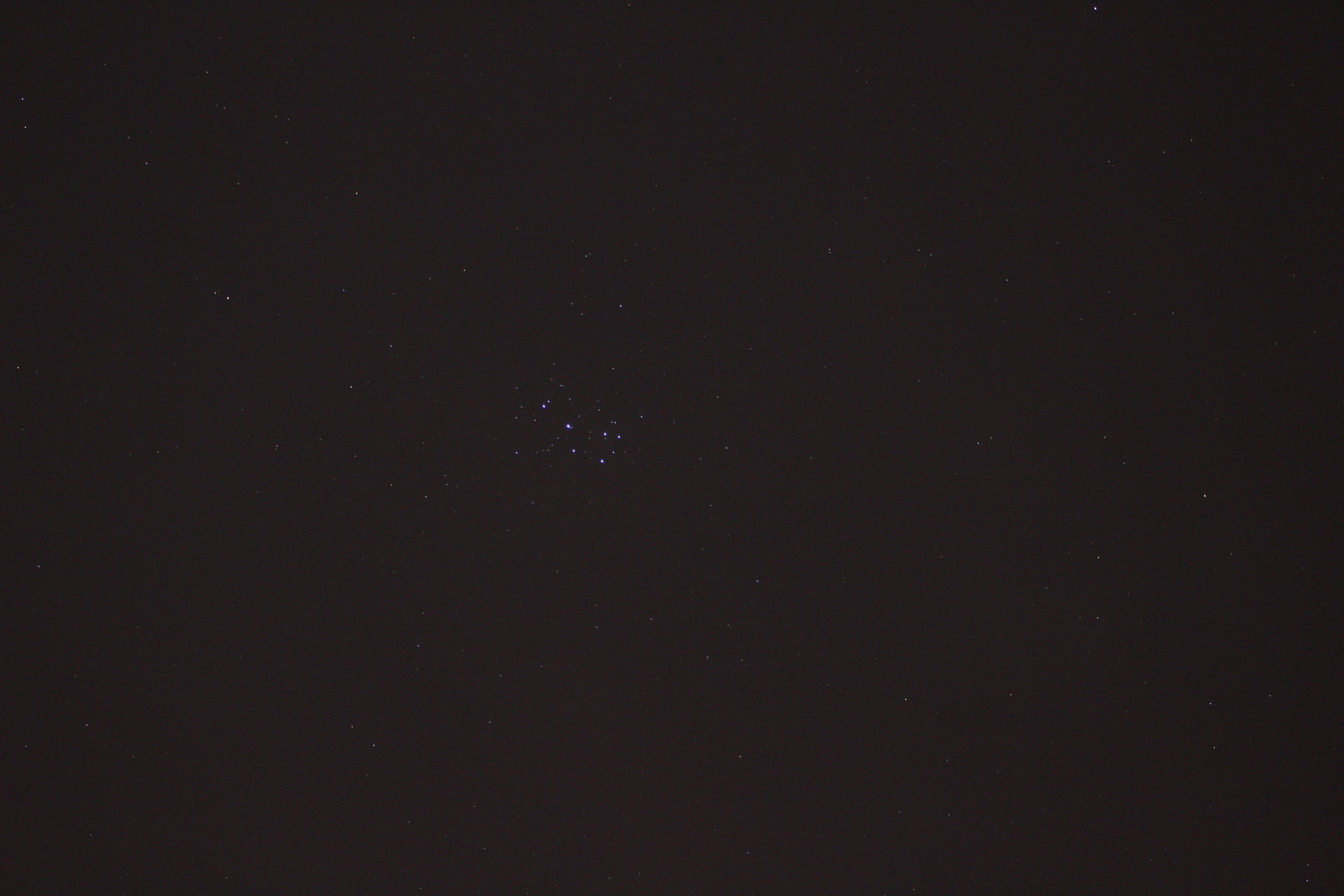
My camera’s memory was filling up, and I decided to end the session with a few images of the Pleiades. Those were one of the best images I had captured that night. The seven sisters were shining beautifully that night with all their grace.

IMG_0971

M45/The Pleiades

IMG_0971

The Pleiades_Cropped

That night was a successful night. I was able to image many celestial objects. It served as the start of my journey to image the comet, and other Deep Sky Objects. I continued my journey in the next few days.


Clear Night of Winter

There are rarely any clear nights during the Canadian winter. That’s why this night of clarity was not to be missed. On December 7, 2014, after bundling myself in two layers of jackets, and a scarf, I went outside, with my telescope, to image Orion.

After assembling, and aligning my telescope to the Full Moon, I was ready to explore the night sky.

The whole time I was there, I experienced problem after problem, and I was able to conquer them all though. For example, I found Orion, but it was a very dim gas cloud from my eyepiece. I needed to image it, but my father’s camera had no liveview. I had to use the internal viewfinder, which couldn’t see Orion, which means I couldn’t focus properly. I could see Jupiter, though.

I slewed to Jupiter and focused the camera. After a few images, I slewed to M42 and started imaging it. Each image turned out bad, because of significant trailing from the telescope. Tracking is still a major issue. I soon decided to image the Moon out of frustration.

I tried imaging M45, but trailing was too great to get a good image. Looking closely at the eyepiece, I realize that there was a one second delay from my command to its response. I tested it by going to M42, and imaging it. The results are here, and they confirm what I feared.

I soon packed up and went back inside, because my battery died. This session was quite productive. I saw M42, and Jupiter, and found a problem to correct on my telescope.

Surprising Discovery In Sudbury

On Thursday, November 14, 2014, I went to Sudbury with my father, and the second day we were there, it was a gorgeous day. My father suggested I take the telescope out to observe the sun, and I did that.

The batteries had died, therefore I got the DC adapter, and plugged it into the car. I looked at the sun, and there were a few minor sunspots on the right side of the Sun. My father, and my aunt, saw the sun, and they were impressed. When my father needed help with some repairs, I centered the sun in the telescope’s eyepiece and, I went to help him leaving the telescope and car running.

My experience with tracking this past year was horrible. It never stayed in the center long enough to take any good photos. That is why it was a surprise to find that the telescope actually stayed in the center. Tracking worked because it was connected to a DC power source. When I stayed in Sudbury during the summer, I connected my telescope to an AC outlet, and it didn’t work as well as I wanted it to. Maybe it has to be connected into a DC plug to power the telescope efficiently.

Whatever happened, we need to do more research on this. If this is the case, then my problem is solved, and I can do all the imaging that I would like to do. I hope that is the case.


UPDATE: A few weeks ago, I tested my telescope’s tracking capabilities using my Pontiac G6 as its power source. Tracking did all right, but not as expected. I had the idea of imaging the Pleiades, but the clouds came in and quickly blocked the night sky. Therefore, I centered my telescope on Sirius. I timed the tracking, and Sirius reached the edge of the Eyepiece’s Field of View in less than 5 minutes. I think that might be the acceptable limit that my friend was talking about, nevertheless, I needed to do more testing. Good Night!

Star Trails with my Telescope

On October 24, 2014, at 12:00 in midnight, I arrived at Glen Major to image the night sky again. This time I decided to bring my telescope with me for its tracking. It took me a long time to set up the telescope, for two reasons.

It took me a while to find a star to align with because my finderscope was out of alignment with my telescope. Some time passed before I found Vega, and align my finderscope to it. I then proceeded to align my telescope to the stars using the Skyalign method. It failed every time, even when I went onto different stars. I then decided to do a one-star alignment with Betelgeuse. It worked and my telescope was ready to do.

I attached my camera on the piggyback mount, and I set the intervalometer to image the night sky indefinitely setting the exposure at 15 seconds, f/5.6, and ISO 1600, and I let it image the night sky. After that, I go into my car to say warm.

I did some homework during that time as well. After that, I turned my telescope, and pointed it towards the Big Dipper. I took a few photos, and then decided to pack up. It got really cold that night, therefore I had to pack up fast. I packed up very quickly, and I went home. Here is the result of that night:

This video tells me that tracking isn’t moving as fast as it should, and that dew is going to be a problem in the coming days. Hopefully, I can correct that quickly.

Happy Observing!

Solar Viewing with Jim Chung

On Friday, October 10, 2014, I visited Dr. Jim Chung, who is an amateur astronomer, and a fellow Royal Astronomical Society of Canada (RASC) member, at his house. He invited me over so he could show me his solar filter. It is a glass based solar filter that lets in a safe amount of light to look at the sun.

Telescopes need a filter to look at the sun, because the telescope concentrates light. When you look into a concentrated sum beam, it would blind you. If you want to look at the sun, use proper protection!

I set up my telescope on his driveway, where we attached the solar filter, aimed it at the sun, and relished in the majesty of the sun. We saw a sunspot, and the filter worked perfectly. We set the telescope to track on the sun, and we went into his garage where he showed me his workspace.

I saw all the equipment he acquired over the years. It was quite extensive. There were lenses, diagonals, cameras, and many other objects. We returned to my telescope and saw that the scope has drifted greatly from the center, which means the tracking had failed. However, Jim believed that it works just fine, because there is a level of drifting that is acceptable for visual astronomy. However, it is unacceptable for astrophotography. Therefore, I wanted to get more information about making my telescope astrophotography-worthy.

I asked about auto guiders, and focal reducers. Jim told me about auto guiders and that alt-az telescopes (which is what I have), need a wedge to make it act like an equatorial mount. The wedge will correct for North-South drift once it was polar aligned, and the auto guider will take care of East-West drift. Jim soon showed me his the Alan Gee-Telecompressor mark 2 focal reducer, which he highly recommends. It seems like an interesting piece of equipment. We checked the telescope again, and the sun hid behind the clouds.

Therefore, we decided to call it a day. I packed up my scope, and thanked him for his time. In addition, Jim lent me his solar filter to observe the solar eclipse that came up. I thanked him and left his residence.

I had a great time hanging out with Jim. Since this happened over a month ago, my father and I were able to use the solar filter for a couple of events. My father was able to see the solar eclipse that happened on October 23, 2014, but he wasn’t able to find a good location to observe the eclipse from. A day later, I was able to image the large sunspot seen on the Sun. I hope to do more with the Solar Filter, but I will need to return it to Jim soon. Until I find a new one, happy observing!